Websites for art galleries and cultural institutions
Galleries, foundations, art fairs and museums publish all the time: exhibitions, artists, works, events, texts. Their website has to keep up without a developer in the loop. I build complete websites for art and culture: interface, development, a CMS built around how your team publishes, and maintenance after launch.
What usually goes wrong
Exhibitions published late, or not at all. When every new show needs a developer, the website falls behind the programme. The exhibition opens and the site still announces the previous one.
Artworks without proper records. Title, year, medium, dimensions, credits, availability: a work needs structured information, not a caption pasted under an image. Without it the archive can't be searched or reused.
Several websites in one. Exhibitions, events, education, visitor information, a shop: different teams edit different parts on different schedules, and the site has to stay one.
Practical information that is hard to find. Opening hours, address and admission are what most visitors look for, and they are often three clicks away.
The approach
Interface. An interface that steps back so the work, the artists and the programme come first. If you work with a graphic designer, I build their design faithfully; if not, I design the website's interface as part of the project.
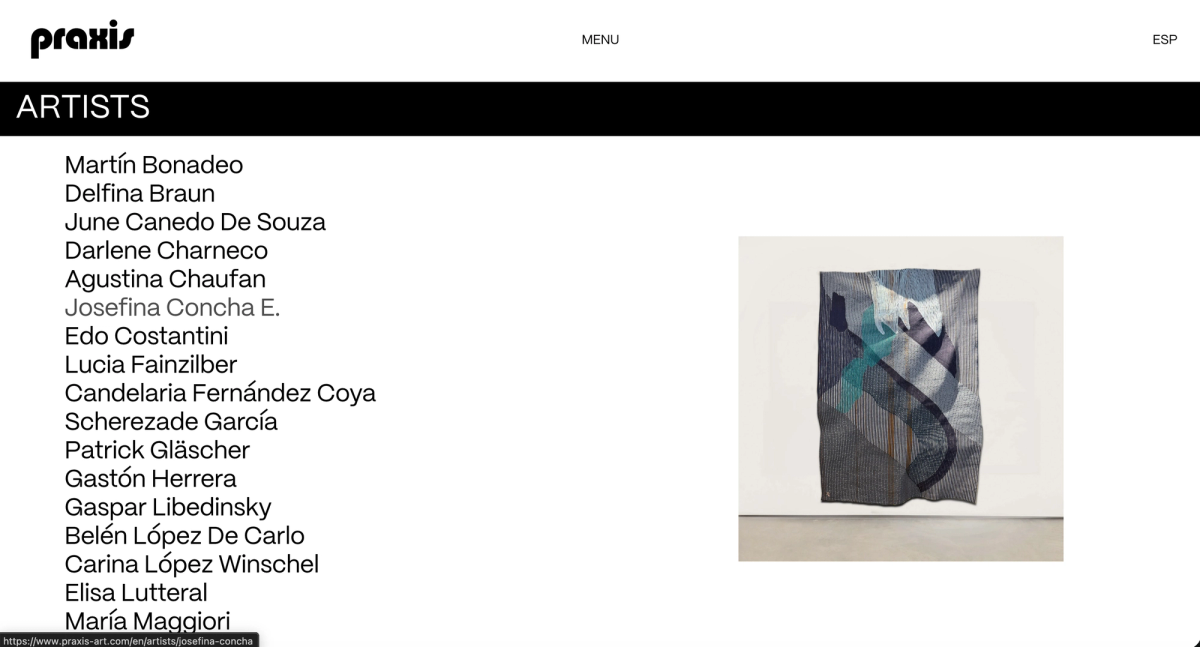
Content model. Exhibitions, artists, works, events and texts are modelled as what they are and linked to each other: an artist's page lists their shows and works, an exhibition shows its artists, and nobody enters the same data twice.
A CMS for the team. Each team publishes its own part (programme, education, press) and previews it before anything goes live.
Languages and maintenance. Multilingual from the start, and maintained after launch: updates, monitoring and small changes, with one person who knows the whole system.
Work
Process
Questions
Can the site handle a large archive? Yes. The archive is structured from the start, by artist, exhibition, year or medium, so it can grow for years without slowing down.
Is design included? It can be. If you work with a graphic designer, I am the technical half of the team. If you don't, I design the website's interface as part of the project. I don't do branding or visual identity.
Can different teams edit different sections? Yes. The CMS can be organised by sections and permissions, so each team edits what it is responsible for.
Can it be multilingual? Yes. Each language has its own address, and texts are translated field by field, so nothing goes out half-translated.
Can you connect a shop or ticketing? Yes. Publications, editions or tickets can be sold from the same site, connected to the platform you already use or to a new one.
What happens after launch? Maintenance is offered by default: updates, monitoring, performance and small changes. You always know who to call.